


14 SEO Best Practices for Blog Traffic Conversions
Millions of bloggers around the world publish fresh content every day. With so many other companies blogging too, why should you invest time and resources in business blogging? Is the blogging market totally saturated?
The answer is no — and blogging is important because it provides your potential customers useful information to inform their buying decisions, which helps improve your company’s credibility and thought leadership.
As well, 79% of companies who blog reported a positive ROI in their inbound marketing efforts. Marketers who invest in blogging efforts also see 67% more leads compared to their peers who do not blog.
Now that you have enough reason to start blogging, what can you do to help your posts stand out from all the noise out there? By making your blogs more SEO-friendly and relevant to search engines, you’ll be able to increase your blog visitors and conversions.
Quick Takeaways

- Focusing on on-page SEO techniques, including E-E-A-T signals, strengthens credibility and conversion potential.
- Off-page SEO strategies, such as quality backlinks and brand mentions, continue to influence rankings and trust.
- AI tools for SEO support topic research, content optimization and performance monitoring, but human review remains essential.
- Prioritising user experience SEO—site speed, mobile-friendly design, clear navigation—improves both traffic and conversions.
- Content optimization strategies that integrate intent, structure and conversion paths yield better results than traffic volume alone.
What is SEO? Why Should You Care?
Search engine optimization (SEO) is a set of best practices to help improve the ranking of your blog on a search engine’s results page, such as Google.
SEO involves using common keywords that web users search for when using search engines, as well as linking to other websites and social media channels. All these practices increase the relevance of your blog to search engines, which helps your posts climb in the rankings and ultimately drive more traffic to your site.
If you don’t prioritize SEO for your blog, why bother with the investment? SEO ensures that your content appears in the right searches so you can reap the benefits of blogging like:
- Cost-effective organic traffic
- Highly targeted and relevant traffic
- Quality leads, visitors, and engagement
- Establishing your brand’s authority
- Earning trust from your audience
- Building a strong brand image
While most of us know what SEO is (or have an idea) at this point, very few actually understand how to utilize it properly. We’ve outlined the most important best practices below.
1. Emphasize On-Page SEO Techniques for Conversion
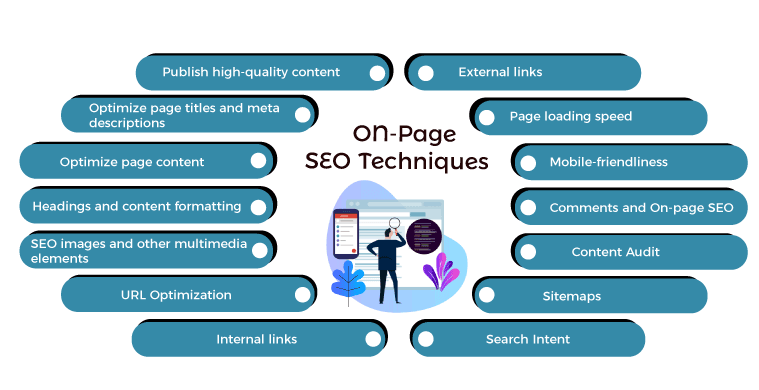
On-page SEO remains the foundation of blog traffic and conversions. Key elements include keyword alignment (more on that in a sec), meta tags, headings, internal linking, and user-friendly formatting. When you use keywords like blog SEO tips, SEO for bloggers, increase blog traffic, align them clearly with your content purpose, you help search engines and readers understand your topic.
But conversion depends on more than traffic. Your blog must guide readers toward action. A clear call to action (CTA) at the end of each post—such as subscribing, downloading a guide, or contacting you—turns passive readers into engaged prospects. Also make sure your content has a logical structure, readable paragraphs, relevant sub-heads, and engaging visuals. All of this supports both search visibility and user behaviour that leads to conversions.
Alt text: on-page SEO techniques graphic
2. Choose the RIGHT Keywords
Search engines rely on keywords to determine what is and isn’t relevant to a web user’s search. A web user typically types in words or a series of words into the search engine related to the topic of their choice. The search engine then lists the top results that it determines to be most relevant to the topic.
To optimize your blog, you should identify and incorporate keywords that are highly relevant to your given topic into your post. Google’s Keyword Tool is one of the many resources out there you can use to look up a keyword’s average monthly searches, relevance, and competitiveness as well as similar keywords
3. Build Credibility with E-E-A-T SEO
Search engines emphasize experience, expertise, authoritativeness and trustworthiness (E-E-A-T). (Google for Developers) For blogs, especially those targeting decision-makers or offering business-critical advice, demonstrating E-E-A-T is essential.

Actionable steps include:
- Use author bylines with bios showing expertise.
- Provide evidence, data or case studies to support claims.
- Use credible outbound links to authoritative sources and receive inbound mentions from reputable sites.
- Clearly present contact information, disclaimers or methodology where relevant.
By embedding these practices into your blog strategy, you improve search visibility and convert readers who recognise your brand as reliable
4. Use Content Optimization Strategies to Match User Intent
Traffic is only useful if it aligns with what the user intends to do or learn. Content optimization strategies help match intent and structure your blog posts accordingly. Start with keyword research that goes beyond volume: look for questions your audience asks, phrases they use and topics they care about.
Next, structure your content around those queries. Use headings like “How to…” or “What you need to know about…”, provide step-by-step guidance, link to related resources, and integrate multimedia where relevant. Make sure your blog answers the “so what?” for the reader—what’s the benefit, next step or takeaway? Finally, add conversion points: free downloads, contact forms, or links to service pages. These convert relevant traffic into meaningful outcomes.
5. Be Picky About Your Links
Don’t throw links into your blog just because they’re somewhat relevant. Google wants to see links in your blog because it proves you’ve done your research and you’re citing your sources.
But Google doesn’t want you researching and citing any old source. No, Google wants quality. Generally, sites that enjoy a low Alexa score are best for SEO for your blog.
However, lower popularity websites with a high Alexa score might mean high relevancy and high authority in your industry, so don’t count them out if they’re important – like professional organizations or niche authorities.
- Apply Off-Page SEO Strategies to Strengthen Presence
Off-page SEO strategies remain critical for boosting your blog’s authority and increasing the chance of conversion. These include:
- Building high-quality backlinks from relevant, authoritative sites.
- Getting brand mentions, guest posts or featured articles in industry publications.
- Engaging in social media promotion to increase share-ability and visibility.
- Encouraging user or reader reviews, comments or community engagement.
When your blog is referenced by respected sites and builds mention-based signals, search engines interpret your content as trustworthy. This visibility helps attract traffic and improves the conversion potential of that traffic, as users feel more confident in your brand.
7. Only Create and Publish Original Content
It’s important to create original content that provides useful information to your readers. Google loves original content because it helps its algorithms do their job. No one wants to click on three blogs offering the same tips word-for-word when they need nuanced answers. Google knows this.
When writing your blog, use subheadings to help break up your copy and to also help search engines scan and index your post more easily. This will tell Google what your blog is about and help you squeeze the effectiveness out of your original copy.
Where appropriate, include at least three links to other sites, social media channels, or pages on your blog to help drive additional traffic to your post. When you link to other sites, they may also link their content to your site, which helps increase your traffic as well – but only if it’s original.
8. Consider Your Meta Description and Tags
Adding a short meta description to your blog makes it easier for search engines to find your post. A meta description should accurately summarize your blog and include your top keywords.
You’ll also want to create relevant categories and tags to help organize your blogs, so readers can find specific posts quickly from your homepage or main blog screen. Tags can also organize themselves by popularity or other factors with the right WordPress plugin.
9. Include Autocomplete Synonymous Keywords and Questions
Run a search on Google and you’ll unlock dozens of keyword and topic ideas – synonymous ideas. Google is providing valuable information here.
The search engine wants to answer every user’s inquiry as quickly as possible. Ergo, if you can answer more relevant questions and synonymous queries, SEO for your blog will improve. See why the long word counts are so beneficial?
10. Optimize User Experience SEO to Retain and Convert
Even great content won’t deliver results if users leave your site quickly or don’t engage. User experience SEO covers site speed, mobile-responsiveness, clear navigation, accessible design, and minimal intrusive ads. These factors influence bounce rate, session duration and conversion likelihood.
Make sure your blog is easy to read: short paragraphs, subheads, bullet points, images. Ensure pages load quickly and work cleanly across devices. Use internal links to related articles and convert with visible CTAs. A seamless user experience makes it easier for visitors to stay, explore and take action.
11. Leverage AI Tools for SEO to Scale Efficiently
AI tools for SEO are now essential for blog teams looking to scale content and conversions. These tools help with topic research, keyword clustering, competitor analysis, content optimization, and performance tracking. Use them to generate topic ideas, assess readability, refine meta descriptions, and monitor ongoing performance.
However, automation does not replace human insight. Quality still depends on human editorial review, brand voice, and strategic intent. Use AI to support your process, not to publish without oversight. By combining AI tools with human editing you can increase output while maintaining relevance, accuracy and conversion focus.
12. Create a Conversion-Focused Content Funnel
Traffic is the first step—conversion is the goal. Designing a content funnel helps guide blog readers toward conversion. Your funnel might look like:
- Top of funnel: Informative posts aligned with search queries (e.g., “SEO best practices 2025”).
- Middle of funnel: Deeper content linking to resources, case studies, or downloadable assets (e.g., “AI tools for SEO explained”).
- Bottom of funnel: Posts that invite action, such as service pages or contact forms.
Each piece of content should link logically to the next step, reducing friction and making conversion easy. Monitor which blog posts generate leads or contacts and replicate that structure across your content strategy.
13. Monitor, Test and optimize Continuously
Blog SEO is not set-and-forget. Regular monitoring and testing ensure your traffic converts. Use analytics to track which posts drive leads or actions, which have high bounce rates, and which need improvement. Test meta titles, headings, CTAs, landing-page layouts, internal links.
Use tools to identify pages that rank but underperform in conversion. Then optimize those pages: refresh content, add stronger CTAs, improve readability, update stats, or optimize images. This continuous optimization approach ensures your blog grows in both traffic and value.
14. Measure ROI and Align With Business Goals
Finally, align blog efforts with business goals and measure conversion-based metrics, not just traffic. Useful metrics include: number of qualified leads from blog posts, conversion rate of blog visitors, time to conversion, and content-influenced revenue.
Regularly review performance in relation to goals. For example, if your objective is lead generation for a service team, assess which topics bring leads and which simply bring general traffic. Stop investing in low-impact content and double down where results show.
By linking blog SEO to business outcomes, you prove value, improve budget allocation and gain support for further content investment.
Always Prioritize SEO for Your Blog If You Want Serious ROI
Ask yourself why you bother with your blog. What’s it all for? If you’re like most, you want to reap the benefits of organic traffic instead of paying for ads. You want to earn traffic from Google, engage visitors enough to stay, and eventually convert them into customers.
You can’t do any of that without SEO for your blog – consistent SEO. SEO isn’t something you do once or every few months. You must integrate SEO into your overall blogging strategy. From your topic selection down to publishing, SEO must play a starring role.
Don’t have the time to devote to SEO on the level you know you need? We’ve got you covered with our customizable Content Builder Packages.






Get a Free Consultation
for Content Marketing


